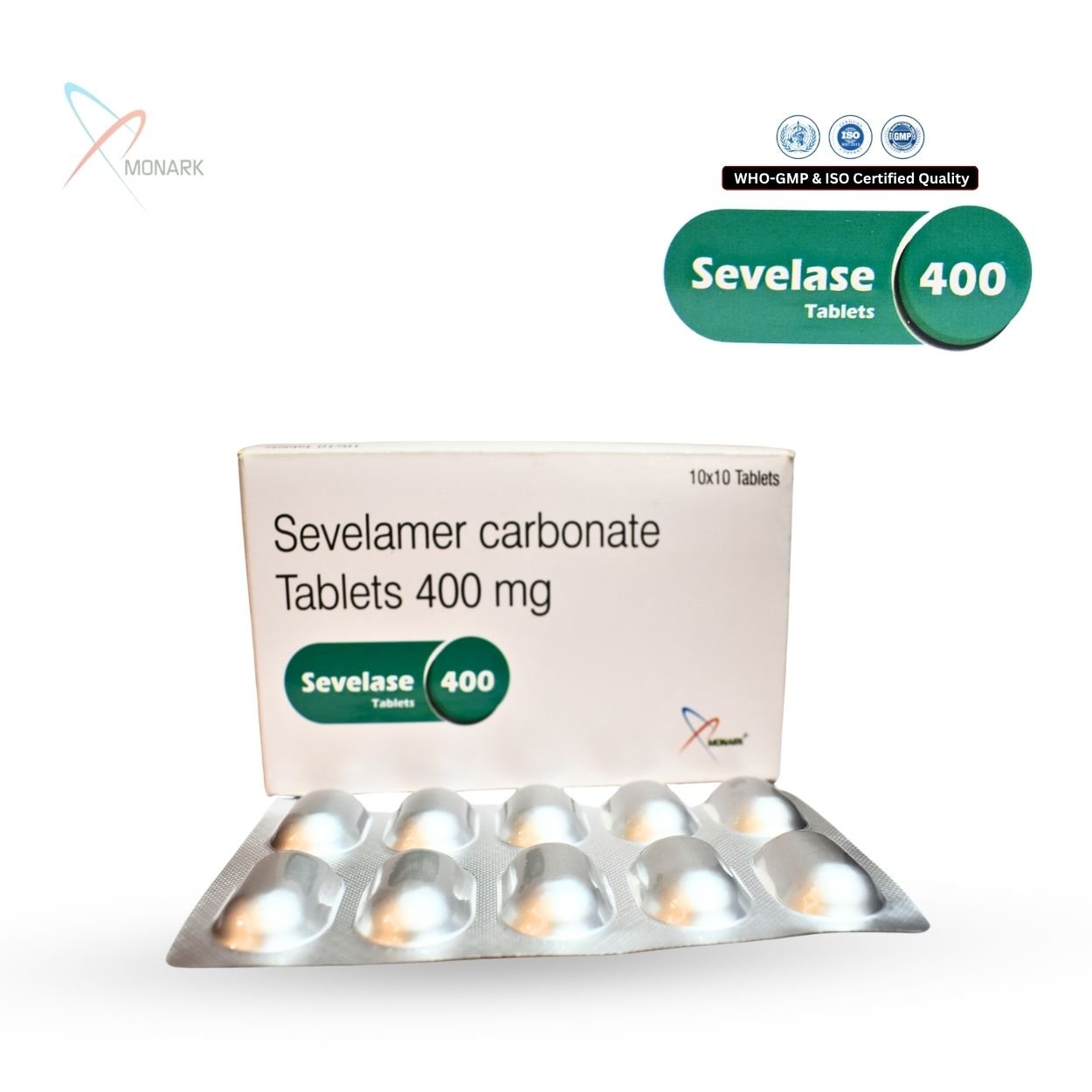
Sevelamer Carbonate Tablets 400 mg – Sevelase-400 Tablets
Managing phosphate levels can be an important part of care for people with chronic kidney disease who are undergoing dialysis. Sevelase-400 Tablets, containing Sevelamer Carbonate 400 mg, are formulated as a phosphate-binding medicine designed to help control phosphate levels as prescribed by a healthcare professional.
When elevated serum phosphorus requires management, a suitable phosphate binder may form part of an individualized treatment plan. Sevelase-400 Tablets provide Sevelamer Carbonate 400 mg in a convenient tablet formulation, supplied in 10×10 Alu/Alu packing.
💡 Did You Know?
Sevelamer carbonate is a non-absorbed phosphate binder. It works mainly inside the gastrointestinal tract by binding dietary phosphate and reducing its absorption, thereby helping lower serum phosphorus.
Product Info
|
Product Detail |
Information |
|---|---|
|
Brand Name |
Sevelase-400 Tablets |
|
Composition |
Sevelamer Carbonate Tablets 400 mg |
|
Product Type |
Phosphate Binder |
|
Strength |
400 mg |
|
Packing |
10×10 Alu/Alu |
|
MRP |
₹2,180 |
|
Route |
Oral |
Uses of Sevelase-400 Tab
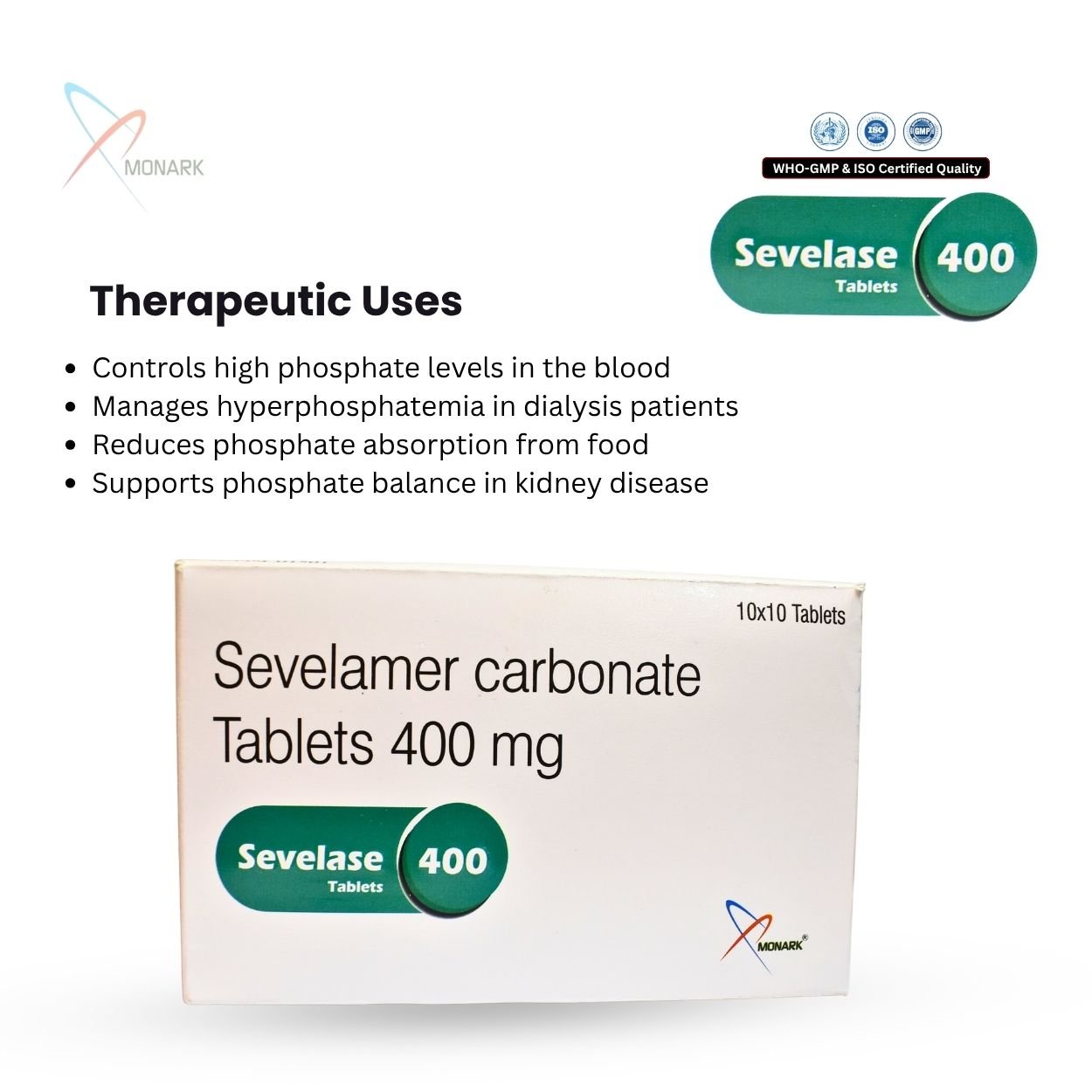
Sevelamer carbonate is a phosphate binder used to help control serum phosphorus in people with chronic kidney disease (CKD) on dialysis, according to prescribing information.
1. Helps Control Serum Phosphorus
Sevelamer carbonate tablets help bind phosphate in the gastrointestinal tract and reduce its absorption, supporting the management of serum phosphorus levels.
2. Supports Phosphate Management in CKD
For eligible patients with chronic kidney disease, sevelamer may be prescribed as part of a broader phosphate-management strategy.
3. Used in Dialysis Patients
Sevelamer 400 mg tablets may be prescribed for patients with CKD who are receiving dialysis when phosphate control is required.
4. Helps Manage Hyperphosphatemia
By binding dietary phosphate in the digestive tract, sevelamer carbonate can help reduce phosphate absorption and support management of elevated serum phosphorus.
5. Provides a Non-Calcium Phosphate-Binding Option
Sevelamer carbonate is a calcium-free, metal-free phosphate-binding polymer, making its mechanism distinct from calcium-based phosphate binders.
In short: Sevelase-400 is designed around targeted phosphate control, with its action taking place primarily within the digestive tract.
How Sevelamer Carbonate Tablets 400 mg Work
Sevelamer carbonate is a non-absorbed phosphate-binding polymer. After oral administration, its amine groups interact with phosphate within the gastrointestinal tract. This reduces phosphate absorption and subsequently helps lower serum phosphorus.
Rather than being absorbed into the bloodstream to produce its primary effect, sevelamer works locally in the gastrointestinal tract. This mechanism makes it a useful component of phosphate management for appropriately selected CKD patients on dialysis.
1. Binds Dietary Phosphate
Sevelamer carbonate binds phosphate present in the gastrointestinal tract.
2. Reduces Phosphate Absorption
The phosphate-binding action helps decrease the amount of phosphate absorbed from the digestive tract.
3. Supports Serum Phosphorus Control
Reduced phosphate absorption helps support the management of serum phosphorus levels.
4. Works Locally in the Gut
The active polymer is not systemically absorbed, with its primary phosphate-binding activity occurring within the gastrointestinal tract.
5. Supports Ongoing Phosphate Management
When used according to a healthcare professional's instructions, sevelamer tablets can form part of an ongoing phosphate-control plan.
The key idea: Sevelamer does not simply “remove phosphorus from the blood”; it helps control phosphorus by binding phosphate in the digestive tract before it can be absorbed.
Dosage of Sevelamer Carbonate Tablets 400 mg
The appropriate Sevelamer Carbonate dosage depends on factors such as serum phosphorus levels, previous phosphate-binder therapy, age, and clinical condition. Prescribing information recommends administration with meals, with dosage adjusted according to the patient's phosphate-control needs.
For this reason, the 400 mg strength should not be used to calculate an individual patient's dose independently. The prescribing healthcare professional should determine the number of tablets and dosing schedule.
1. Take With Meals
Sevelamer carbonate tablets are generally administered with meals so that the phosphate binder can act on phosphate from food.
2. Follow the Prescribed Schedule
Take Sevelamer 400 mg tablets exactly as directed by the treating healthcare professional.
3. Dose Depends on Phosphorus Levels
The required dose may be adjusted according to serum phosphorus levels and treatment response.
4. Do Not Self-Adjust
Do not increase, decrease, or discontinue the dose without medical advice.
5. Consider Other Medicines
Because sevelamer can affect the absorption of some oral medicines, medication timing may need to be separated when clinically appropriate.
⚠️ Dosage warning: Do not determine your personal Sevelamer dose from the 400 mg tablet strength alone; use it only according to your prescribed treatment plan.
Remember: Effective phosphate management depends on the right dose, correct timing with meals, regular monitoring, and professional medical supervision.
Side Effects
Sevelamer Carbonate Tablets 400 mg are generally used as prescribed, but side effects may occur in some patients. Digestive or gastrointestinal symptoms can be reported, while severe or unusual reactions should be addressed promptly.
Common Side Effects
|
Common Side Effect |
Short Description |
|---|---|
|
Nausea |
Feeling sick or uncomfortable in the stomach. |
|
Vomiting |
May occur as a gastrointestinal adverse effect. |
|
Diarrhea |
Loose or frequent stools may occur. |
|
Dyspepsia |
May include indigestion or upper-abdominal discomfort. |
|
Constipation |
Difficulty passing stools can occur and should be monitored. |
These gastrointestinal effects are among the adverse reactions reported with sevelamer therapy.
Serious and Rare Side Effects
|
Serious/Rare Effect |
What to Watch For |
|---|---|
|
Bowel obstruction |
Severe abdominal symptoms or difficulty passing stool/gas require urgent medical evaluation. |
|
Gastrointestinal bleeding |
Unusual or significant gastrointestinal bleeding needs prompt medical attention. |
|
Intestinal perforation |
A rare but serious gastrointestinal complication. |
|
Severe dysphagia |
Difficulty swallowing or tablet retention may require medical assessment. |
|
Severe gastrointestinal inflammation |
Persistent or worsening gastrointestinal symptoms should not be ignored. |
Serious events including dysphagia, bowel obstruction, gastrointestinal ulceration, necrosis, colitis and perforation have been reported with sevelamer use.
Precautions When Using Sevelamer Carbonate Tablets
Safe use of Sevelamer Carbonate 400 mg requires attention to medical history, other medicines, and gastrointestinal symptoms.
1. Discuss Gastrointestinal Problems
Tell your healthcare professional if you have severe constipation, swallowing difficulties, gastrointestinal motility problems, or previous major GI surgery.
2. Watch for Severe Constipation
Constipation can become clinically significant. Worsening or severe symptoms should be evaluated promptly.
3. Check Other Medicines
Sevelamer can reduce the absorption of some oral medicines. Certain medicines, including ciprofloxacin and mycophenolate mofetil, require separate administration according to prescribing information.
4. Monitor Nutritional Status
Sevelamer may affect the absorption of fat-soluble vitamins and folic acid, so nutritional monitoring may be appropriate in some patients.
5. Follow Professional Guidance
Do not use Sevelase-400 if you have a known contraindication or allergy to sevelamer or its ingredients. Sevelamer carbonate is contraindicated in bowel obstruction.
A simple rule: Take your medicine exactly as prescribed and report unusual or severe gastrointestinal symptoms rather than ignoring them.
Let's Connect Your Pharma Plans
Have a product requirement? Planning to expand your pharma portfolio? Exploring a new business model?
From Sevelase-400 Tablets to PCD Pharma Franchise, Third-Party Manufacturing, Ethical Promotion, and Export Medicines, Monark Biocare provides multiple avenues to explore pharmaceutical business opportunities.
Tell us what you're looking for. Let's explore the right pharma opportunity together.
Disclaimer: This content is for general informational and pharmaceutical-product awareness purposes only. Sevelase-400 should be used only under appropriate medical guidance. Dosage, suitability, interactions, and treatment duration should be determined by a qualified healthcare professional.
Frequently Asked Questions
1. What are Sevelamer Carbonate Tablets 400 mg used for?
Sevelamer carbonate is a phosphate binder used to help control serum phosphorus in adults and children with chronic kidney disease on dialysis, according to prescribing information.
2. How does Sevelamer Carbonate work?
It works mainly in the gastrointestinal tract by binding dietary phosphate, reducing phosphate absorption and helping control serum phosphorus.
3. Should Sevelamer Carbonate be taken with food?
Prescribing information recommends taking sevelamer carbonate with meals because its phosphate-binding action needs to occur in the gastrointestinal tract alongside dietary phosphate.
4. What are the common side effects of Sevelamer?
Commonly reported gastrointestinal effects include nausea, vomiting, diarrhea, dyspepsia, abdominal pain, flatulence, and constipation.
5. Can Sevelamer interact with other medicines?
Yes. Sevelamer can affect the absorption of some oral medicines. For example, prescribing information identifies interactions with ciprofloxacin and mycophenolate mofetil and provides specific separation recommendations.