5th October 2026 | By Admin
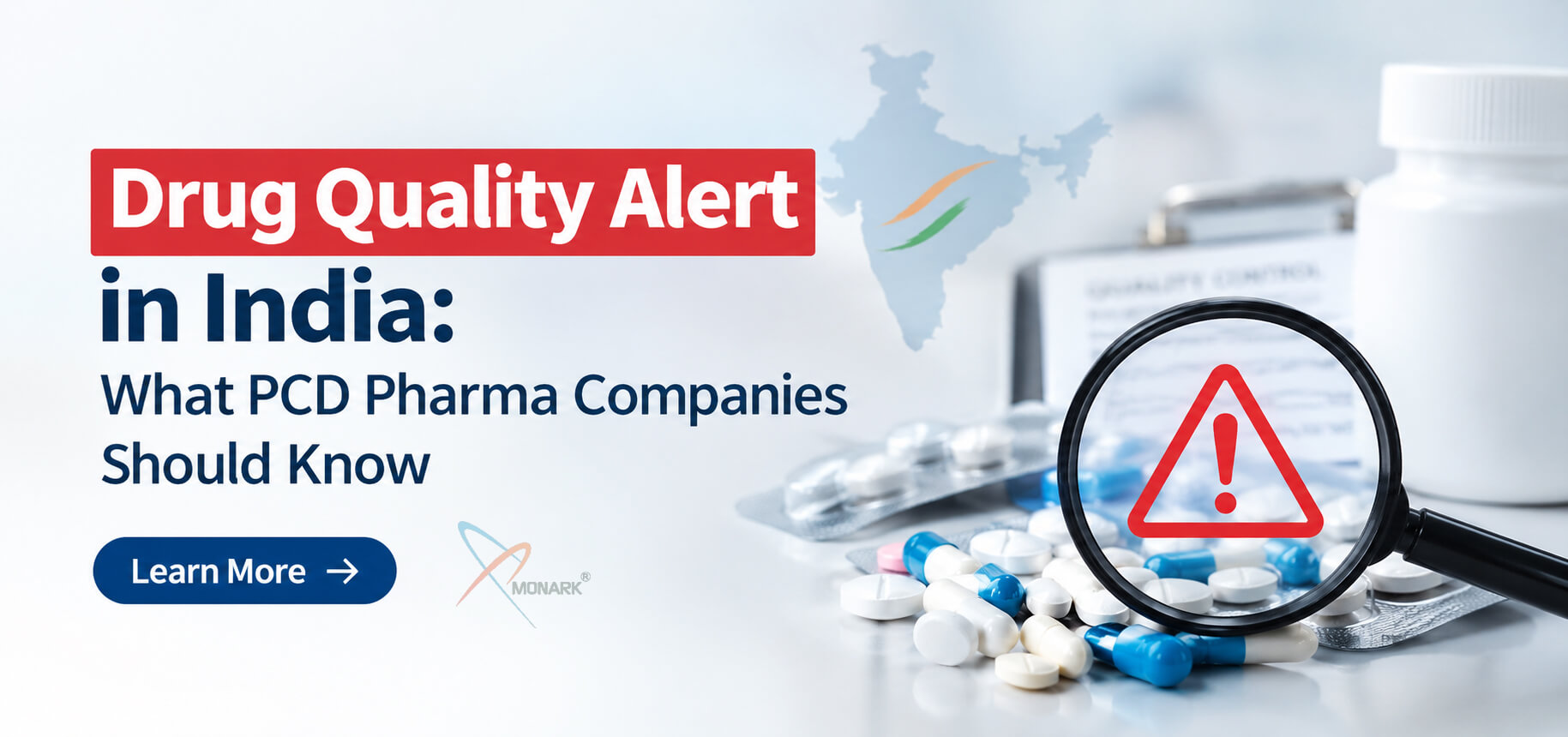
Drug Quality Alert in India: What PCD Pharma Companies Should Know
A pharmaceutical business can spend years building its reputation, and only one quality-related issue can make customers question it.
That is why a drug quality alert in India deserves attention from every pharmaceutical business, particularly companies involved in PCD marketing, distribution, and franchise operations.
For a PCD pharma company in India, the concern is not limited to whether a particular medicine meets quality specifications. There are wider questions to consider:
Was the correct batch identified? Is the manufacturer reliable? Was the product tested properly? What happens to existing inventory? How should distributors be informed? And what can be done to prevent similar issues in the future?
These questions bring us to an important principle:
Pharmaceutical quality should be managed proactively, not only after a drug alert appears.
By understanding NSQ alerts, CDSCO compliance requirements, GMP practices, manufacturing controls, and supplier evaluation, PCD companies can make better decisions and build stronger pharmaceutical businesses.
The Real Meaning Behind a Drug Quality Alert
A drug quality alert is essentially a warning or notification concerning a pharmaceutical product or batch where a quality-related concern has been identified through applicable testing, surveillance, or regulatory processes.
It may involve a particular product, batch, manufacturer, testing parameter, or other relevant detail.
For a PCD business, the most important thing is not to panic when an alert appears.
The first step is to verify the details.
A company should ask:
-
Is our product actually mentioned?
-
Does the batch number match?
-
Is the manufacturer the same?
-
What quality parameter was involved?
-
What does the official notification say?
-
Do we have the affected batch in stock?
This approach prevents assumptions and helps a company respond based on facts.
NSQ Drugs Explained: What Does “Not of Standard Quality” Mean?
One of the most important terms associated with pharmaceutical quality alerts is NSQ, meaning Not of Standard Quality.
In simple terms, an NSQ finding means that a tested drug sample did not meet one or more applicable quality specifications.
But there is an important distinction.
An NSQ notification generally identifies the relevant product or batch and the particular test finding. Therefore, businesses should examine the actual notification instead of treating every product from a particular manufacturer as automatically affected.
What Can Cause an NSQ Finding?
Depending on the medicine and applicable specifications, testing may involve areas such as:
-
Assay
-
Dissolution
-
Identification
-
Description
-
Uniformity
-
Sterility, where applicable
-
Other product-specific quality parameters
These tests help determine whether a pharmaceutical product meets its required specifications.
Why Should PCD Companies Understand NSQ Alerts?
Because PCD companies are often directly connected with product marketing and distribution.
Even if manufacturing is outsourced, the company's commercial reputation remains connected to the products carrying its business identity.
That makes PCD pharma quality an important business consideration, not simply a technical manufacturing topic.
CDSCO Drug Alerts: What Should a PCD Company Actually Check?
When a CDSCO drug alert is published, the first reaction should be verification rather than speculation.
A PCD company should compare the alert with its own product records.
The 8-Point Verification
1. Product name
Is the exact product listed?
2. Strength
Does the strength match your product?
3. Dosage form
Is it a tablet, capsule, syrup, injection, or another formulation?
4. Batch number
This is one of the most important details.
5. Manufacturer
Does the manufacturer match your supply source?
6. Test result
What specific quality issue was identified?
7. Reporting information
Review the applicable testing or reporting details.
8. Regulatory direction
Check what action, if any, is specified or required.
This process gives the company a clear starting point.
Why This Matters More for PCD Pharma Companies
A PCD business operates in a relationship-driven environment.
Distributors expect dependable products. Healthcare professionals expect appropriate product information. Customers expect consistency. And business owners expect their manufacturing partners to maintain appropriate standards.
A quality issue can therefore create a chain reaction.
Product concern → Inventory concern → Distributor concern → Reputation concern
That is why quality management needs to become part of everyday PCD operations.
Protecting Your Brand
A pharmaceutical brand is not built only through advertising.
It is built through repeated experiences.
If products are consistently supplied with proper documentation, reliable packaging, appropriate quality controls, and responsive support, trust grows.
Protecting Distributor Relationships
Distributors need confidence that the products they receive are appropriately managed.
Clear batch records and communication systems can make quality-related situations easier to handle.
Protecting Long-Term Business Growth
A company focused only on immediate sales may select suppliers based primarily on price.
A company focused on sustainable growth asks a different question:
“Can this manufacturer support the quality expectations of our business over the long term?”
That is the mindset a modern PCD company should adopt.
GMP and Pharmaceutical Quality: The Foundation Behind the Product
When discussing pharmaceutical quality, one term repeatedly comes into focus: GMP and pharmaceutical quality.
Good Manufacturing Practices provide a framework for controlled pharmaceutical production.
For PCD companies, understanding GMP can make manufacturer selection more meaningful.
Instead of asking only:
“How many products do you manufacture?”
ask:
“What systems do you have to control product quality?”
GMP Compliance in Pharmaceutical Manufacturing Covers More Than Production
GMP compliance in pharmaceutical manufacturing can involve multiple areas, including:
|
Area |
Why It Matters |
|
Raw materials |
Supports appropriate input quality |
|
Production |
Promotes controlled manufacturing |
|
Equipment |
Helps maintain consistent processes |
|
Testing |
Helps verify product specifications |
|
Documentation |
Supports traceability |
|
Personnel |
Supports trained and controlled operations |
|
Storage |
Helps protect product integrity |
|
Quality assurance |
Supports ongoing quality oversight |
|
Investigations |
Helps address identified deviations |
The goal is consistency.
A pharmaceutical product should not depend on luck, individual judgment, or uncontrolled processes.
Revised Schedule M Compliance: Why PCD Businesses Should Care
Another term worth understanding is Revised Schedule M compliance.
Schedule M relates to Good Manufacturing Practices and the premises and requirements for pharmaceutical manufacturing.
For PCD companies, this matters because the manufacturing environment behind their products can influence product consistency and regulatory confidence.
However, there is a bigger lesson here.
Don't Choose a Manufacturer by Price Alone
A cheaper product is not necessarily the better business decision.
When comparing manufacturers, consider:
-
Manufacturing infrastructure
-
Quality systems
-
Testing capabilities
-
Documentation
-
Compliance approach
-
Production capacity
-
Product consistency
-
Communication
-
Complaint handling
In other words:
Price gets your attention. Quality earns your trust.
The PCD Manufacturer Selection Test
If you are choosing a quality-focused PCD pharma company, use these five questions before making a decision.
Question 1: Who Actually Manufactures the Product?
Know the manufacturing source behind the product.
Question 2: What Quality Systems Are Followed?
Look beyond marketing claims and understand the manufacturer's quality processes.
Question 3: How Are Batches Tested and Documented?
Traceability becomes particularly important when quality questions arise.
Question 4: How Are Complaints Handled?
A professional manufacturer should have an organized approach to quality-related complaints and investigations.
Question 5: Will the Partner Grow With Your Business?
A good pharmaceutical partnership should support your business as your product portfolio and market reach expand.
This approach is much more useful than choosing a partner simply because it offers the largest product list.
Third-Party Manufacturing: Convenience Needs Quality Control
Third-party manufacturing can be an effective model for pharmaceutical businesses that want to focus on marketing, distribution, and business development without establishing their own manufacturing facility.
But outsourcing production does not mean outsourcing responsibility for choosing a reliable partner.
Before selecting a third-party manufacturer, examine:
-
Manufacturing standards
-
GMP-related systems
-
Product testing
-
Batch documentation
-
Packaging controls
-
Product specifications
-
Quality assurance
-
Regulatory documentation
-
Communication procedures
For businesses considering manufacturing support, Monark Biocare provides information about its third-party manufacturing services.
The important point is simple:
Third-party production should be supported by first-class quality evaluation.
Pharmaceutical Tablet Products: Quality Starts Before the Market
Tablets may look simple from the outside, but pharmaceutical tablet products require controlled manufacturing and testing processes.
Factors such as formulation, raw materials, compression, coating where applicable, packaging, storage, and testing can all contribute to the finished product.
For PCD companies, therefore, product selection should involve more than checking the price and packaging design.
Consider whether the product is supported by appropriate manufacturing and quality systems.
Businesses interested in tablet products can also explore Monark Biocare's pharmaceutical tablet products for its product portfolio.
PCD Pharma Quality Checklist
Before finalizing a pharmaceutical partner, run through this checklist.
|
Quality Area |
What to Evaluate |
|
Manufacturer |
Identity and manufacturing capability |
|
GMP |
Applicable manufacturing practices |
|
Product testing |
Testing and quality-control systems |
|
Batch records |
Traceability and documentation |
|
Packaging |
Product protection and labeling |
|
Storage |
Appropriate storage controls |
|
Complaints |
Quality complaint process |
|
Compliance |
Applicable regulatory requirements |
|
Product range |
Suitability for your market |
|
Communication |
Responsiveness and transparency |
A checklist like this turns manufacturer selection from a guess into a structured business decision.
What If Your Product Appears in a Quality Alert?
This is where preparation matters.
If a product or batch appears in a relevant quality alert, follow a controlled process.
First: Stop Guessing
Confirm the exact product and batch.
Second: Check Your Stock
Review warehouse and distributor inventory.
Third: Contact the Manufacturer
Ask for clarification and relevant quality information.
Fourth: Review Distribution
Determine where the relevant batch has been supplied, where applicable.
Fifth: Follow Applicable Regulatory Procedures
Take action based on the official notification and appropriate professional or regulatory guidance.
Finally: Learn From the Event
Review your supplier-selection and monitoring process.
A quality alert should not only answer:
“What went wrong?”
It should also answer:
“What can we improve?”
Quality + Ethical Promotion = Stronger Pharmaceutical Branding
Businesses sometimes overlook another side of pharmaceutical responsibility: promotion.
Ethical Promotion means presenting pharmaceutical information responsibly and avoiding misleading, exaggerated, or unsupported claims.
For PCD companies, ethical communication can strengthen credibility with healthcare professionals and business partners.
A sustainable pharmaceutical brand should therefore combine:
Quality Products + GMP Practices + Regulatory Awareness + Ethical Promotion
This is a much stronger foundation than aggressive promotion alone.
You can learn more about Monark Biocare's approach through its Ethical Promotion page.
Where Monark Biocare Fits Into the Picture
For pharmaceutical entrepreneurs evaluating business opportunities, the choice of partner can influence both product availability and long-term business confidence.
Monark Biocare provides pharmaceutical products and services for businesses exploring PCD opportunities and manufacturing support.
Its PCD Franchise Services can be explored by businesses looking for pharmaceutical franchise opportunities.
The broader objective should remain the same: choose products and partnerships that align with appropriate quality standards for pharmaceutical products and support responsible business growth.
A 60-Second Quality Audit for PCD Companies
Before choosing or continuing with a pharmaceutical partner, ask yourself:
✓ Do I know who manufactures my products?
✓ Can I identify the batch quickly?
✓ Do I understand the manufacturer's quality systems?
✓ Am I monitoring relevant regulatory alerts?
✓ Are my product records properly maintained?
✓ Do I have a process for handling quality complaints?
✓ Do I evaluate manufacturers beyond price?
✓ Are my promotional claims responsible and accurate?
If several answers are “no,” your quality-management process may need attention.
Final Word: Quality Is Not a Department; It's a Business Strategy
A drug quality alert in India should be seen as more than a regulatory headline.
For a PCD pharma company in India, it is a reminder that every product represents the business behind it.
The manufacturer matters.
The batch matters.
The documentation matters.
The quality system matters.
And the way a company responds matters even more.
By paying attention to CDSCO compliance requirements, GMP and pharmaceutical quality, Revised Schedule M compliance, batch traceability, manufacturer selection, and pharma manufacturing quality checks, PCD companies can create a more dependable foundation for growth.
The best pharmaceutical partnerships are not built around one question: “What is the price?”
They are built around a better question:
“Can I confidently put my company's name behind this product?”
That is where quality-focused pharmaceutical business begins.
The information in this article is based on publicly available pharmaceutical regulatory and drug-quality resources, including updates and quality alerts issued by India’s Central Drugs Standard Control Organisation (CDSCO). PCD pharma companies should regularly monitor official regulatory notifications, NSQ (Not of Standard Quality) drug alerts, product recalls, and applicable quality-compliance updates.
For the latest drug quality alerts and regulatory information, readers should refer to the official CDSCO resources and verify product names, batch numbers, manufacturers, and testing details before taking business or distribution decisions.
Official CDSCO Drug Alerts: CDSCO – Drug & NSQ Alerts
Official CDSCO NSQ Alerts: CDSCO – NSQ Alerts
Source: Central Drugs Standard Control Organisation (CDSCO), Government of India.
Looking for PCD Franchise Services or Manufacturing Support?
If you're exploring PCD Franchise Services, pharmaceutical products, or third-party manufacturing, connect with Monark Biocare to discuss your requirements.
Monark Biocare
Address: Plot No. 201, HSIIDC, Alipur, Barwala, Haryana, India
Email: monarkbiocare@gmail.com
Phone: +91-9855986633 | +91-9023256719 | +91-9888656719
Frequently Asked Questions
Q1. What is a drug quality alert in India?
A drug quality alert is a regulatory or quality-related notification concerning a pharmaceutical product or batch where a potential quality concern has been identified through applicable testing or surveillance.
Q2. What is an NSQ drug?
An NSQ or Not of Standard Quality drug is a product whose tested sample does not meet one or more applicable quality specifications.
Q3. How can PCD companies monitor CDSCO alerts?
Companies should regularly review official regulatory information and compare relevant product, manufacturer, and batch details against their own records.
Q4. Why should PCD companies care about GMP?
GMP helps support controlled pharmaceutical manufacturing and consistent product quality. It is therefore an important factor when evaluating a manufacturing partner.
Q5. What is Revised Schedule M compliance?
Revised Schedule M relates to updated Good Manufacturing Practices and associated requirements for pharmaceutical manufacturing premises and operations in India.
Q6. What should I check before selecting a third-party manufacturer?
Evaluate manufacturing standards, quality systems, testing, documentation, product consistency, regulatory practices, capacity, and communication.
Q7. Is product quality important for PCD franchise success?
Yes. Product quality can influence distributor confidence, healthcare-professional relationships, brand reputation, and long-term business sustainability.
Disclaimer: This content is for informational purposes only and does not constitute regulatory, legal, or medical advice. Drug quality alerts and compliance requirements may change. PCD pharma companies should verify the latest information from official CDSCO notifications and applicable authorities before making business, quality, or distribution decisions.