15th October 2026 | By Admin
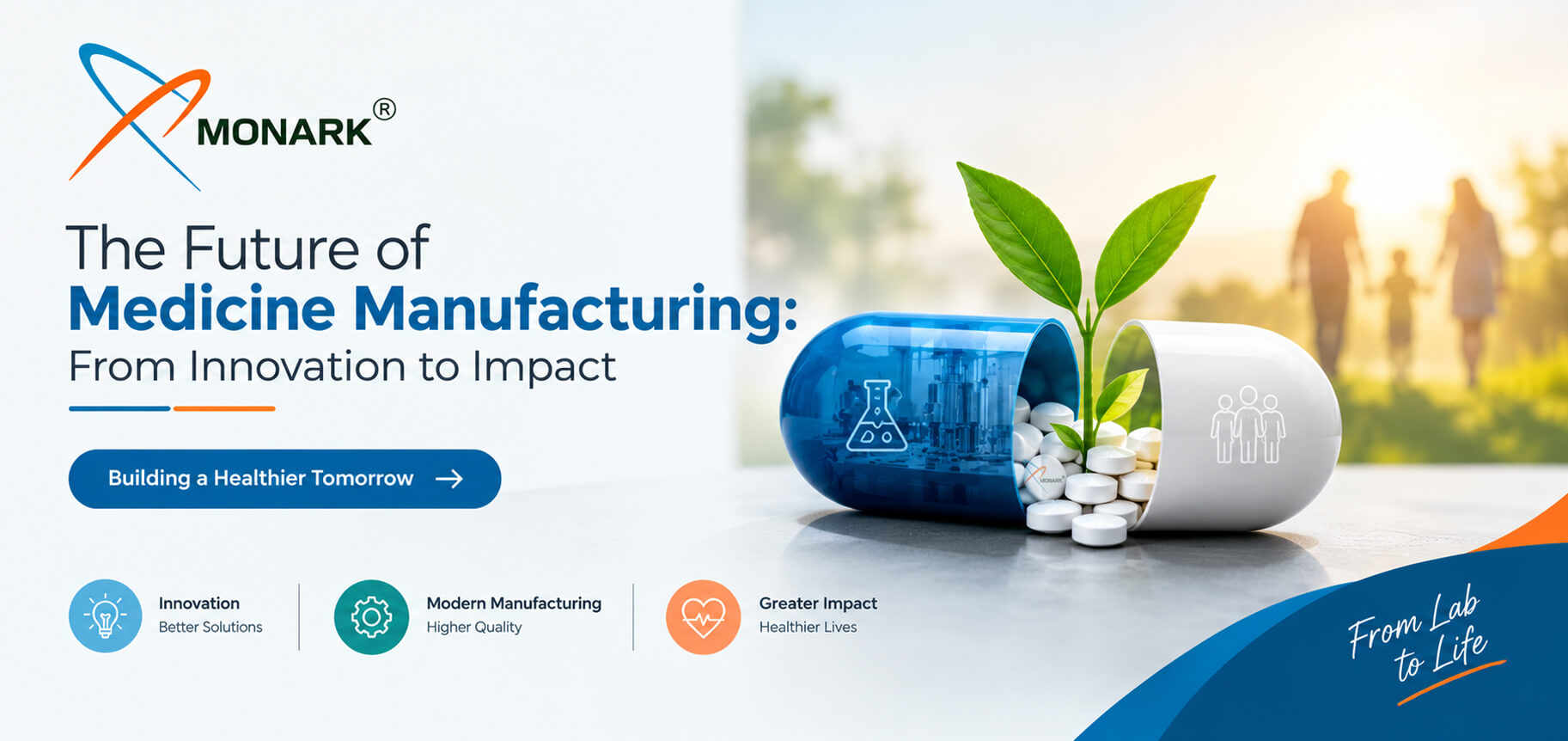
Manufacturing the Medicines of Tomorrow: From Innovation to Impact
How can the pharmaceutical industry turn scientific breakthroughs into safe, reliable, and accessible medicines? This question matters to pharmaceutical companies, healthcare professionals, manufacturers, and millions of patients who depend on quality medicines every day.
The answer goes beyond discovering new molecules or developing advanced formulations. It depends on how effectively the industry can transform research into consistent production, maintain strict quality standards, adopt modern technologies, and deliver medicines when and where they are needed.
This is where the future of pharmaceutical manufacturing is taking shape. Digital technologies, process automation, improved quality systems, and flexible production strategies are changing how medicines are developed and manufactured. At the same time, growing healthcare needs are encouraging pharmaceutical businesses to focus on efficiency, reliability, and patient outcomes.
For pharmaceutical companies such as Monark Biocare, the opportunity lies in connecting manufacturing capabilities with quality-focused operations and sustainable business growth. The goal is not innovation for its own sake. It is innovation that creates measurable value for patients, healthcare providers, and the pharmaceutical industry.
What Is the Future of Pharmaceutical Manufacturing?
The future of pharmaceutical manufacturing is based on combining advanced technology, scalable production, strong quality systems, and reliable supply chains to produce medicines consistently. Artificial intelligence, automation, digital quality management, and improved process monitoring may help manufacturers improve efficiency and traceability. However, successful implementation also requires appropriate validation, trained personnel, regulatory compliance, and a continued focus on patient safety.
Why Medicine Manufacturing Is Becoming More Important Than Ever
Medicine manufacturing is a critical link between pharmaceutical research and patient care. A promising formulation can make a real difference only when it can be produced consistently, meet applicable quality requirements, and reach the market through dependable supply channels.
However, manufacturers face several challenges. They must manage changing market demand, maintain product quality, control production costs, comply with regulatory requirements, and minimise avoidable delays. At the same time, healthcare providers and patients expect dependable access to medicines.
These pressures are encouraging the industry to rethink traditional manufacturing methods.
Read also: Want More Pharma Sales? Grow Your PCD Business Smarter
From production volume to patient value
Historically, manufacturing performance was often associated with production capacity, output, and cost control. These factors remain important, but modern pharmaceutical operations must consider a wider range of priorities.
Key priorities include:
-
Consistent product quality: Maintaining appropriate standards across production batches.
-
Operational efficiency: Reducing unnecessary downtime, material waste, and production delays.
-
Regulatory readiness: Maintaining suitable documentation, traceability, and quality controls.
-
Supply reliability: Supporting the timely availability of medicines.
-
Patient safety: Ensuring that product quality and manufacturing controls support safe use.
These priorities are interconnected. For example, better production planning can help reduce delays, while effective quality management can identify potential issues before they affect product release.
What is changing in pharmaceutical manufacturing?
|
Traditional approach |
Emerging approach |
|
Heavy reliance on manual processes |
Greater use of automation where appropriate |
|
Periodic review of production information |
More timely data monitoring and analysis |
|
Reactive maintenance |
Predictive maintenance where supported by reliable data |
|
Production-focused decision-making |
Integrated quality, efficiency, and supply planning |
|
Limited process visibility |
Improved digital traceability and process monitoring |
The transition does not mean that every manufacturer needs to adopt every new technology. The right approach depends on product requirements, production scale, available resources, regulatory expectations, and the expected benefit.
The real objective is to build a manufacturing system that is efficient, controlled, and capable of supporting consistent medicine quality.
Five Innovations Transforming the Future of Pharmaceutical Manufacturing
Technology is opening new possibilities across the pharmaceutical manufacturing process. When implemented responsibly, these innovations can improve process understanding, strengthen quality management, and help manufacturers respond to changing requirements.
1. Artificial intelligence and data-driven decisions
Artificial intelligence (AI) is becoming an important area of pharmaceutical innovation. Depending on the application and the quality of available data, AI tools may help analyse production trends, identify unusual patterns, support demand forecasting, and improve maintenance planning.
For example, analysing equipment performance data may help a manufacturing team recognise patterns associated with potential equipment failure. Addressing these issues early could reduce unplanned downtime.
AI can also support document review and data analysis. However, its outputs must be evaluated appropriately, particularly when decisions could affect product quality, regulatory compliance, or patient safety.
The business impact: Better-informed decisions, improved planning, and opportunities to identify operational problems earlier.
2. Automation and smart manufacturing equipment
Automation can improve the repeatability of suitable manufacturing activities and reduce dependence on certain manual operations. Depending on the facility and process, it may support material handling, equipment monitoring, packaging, and other production tasks.
Automated systems can also help collect process information and improve consistency when properly designed, validated where required, and maintained.
Nevertheless, automation is not a replacement for trained personnel. Skilled teams remain essential for process oversight, deviation investigation, maintenance, and quality decisions.
The business impact: More consistent operations, improved productivity, and better visibility into manufacturing activities.
3. Digital quality management and traceability
Pharmaceutical manufacturing requires reliable documentation and appropriate controls throughout production. Digital systems can help organise records, manage workflows, track deviations, and support access to relevant production information.
When correctly implemented, these systems may make it easier to identify recurring issues and maintain an organised record of decisions and corrective actions.
Digitalisation must also account for data integrity, access permissions, cybersecurity, system validation where applicable, and appropriate backup procedures.
The business impact: More organised documentation, improved traceability, and stronger support for quality management.
4. Advanced process monitoring
Modern process-monitoring tools can help manufacturers understand how production conditions influence product quality. Depending on the product and process, monitoring may include temperature, pressure, mixing conditions, equipment performance, and other critical parameters.
The value comes from understanding which parameters matter, establishing suitable controls, and responding when results move outside approved limits.
Monitoring alone does not guarantee quality. It must form part of a broader system that includes process knowledge, appropriate testing, trained staff, and documented procedures.
The business impact: Better process visibility and opportunities to identify and address deviations promptly.
5. Flexible and scalable production
Healthcare demand can change due to market conditions, seasonal patterns, new treatment needs, and distribution requirements. Manufacturers therefore benefit from production planning that can accommodate changing volumes without compromising established quality standards.
Scalable pharmaceutical manufacturing involves more than increasing output. It requires suitable equipment, qualified processes, trained personnel, dependable suppliers, and appropriate quality controls.
A process that works at a small scale may behave differently when production volumes increase. Manufacturers must assess those differences rather than assume that a successful process can simply be expanded.
The business impact: Greater operational flexibility and a more structured path from initial production to larger-scale supply.
The Journey from Pharmaceutical Innovation to Market-Ready Medicines
A pharmaceutical idea must pass through several stages before it becomes a medicine available to patients. Each stage introduces different technical, operational, and quality considerations.
Understanding this journey helps explain why innovation and manufacturing must work together.
Step 1: Formulation and product development
The process begins with the development of a suitable formulation. Scientists and development teams consider the active pharmaceutical ingredient, excipients, dosage form, stability, intended use, and other product-specific requirements.
The formulation must be designed and evaluated according to applicable scientific and regulatory expectations.
Step 2: Process development and optimisation
Once a formulation has been developed, teams determine how it can be manufactured consistently. They assess production steps, equipment requirements, process parameters, testing methods, and potential sources of variation.
The purpose is to develop a process that can reliably produce material meeting established specifications.
Step 3: Scale-up and technology transfer
Moving from development to commercial production can introduce new challenges. Equipment dimensions, mixing behaviour, heat transfer, processing time, and other conditions may differ between scales.
A structured technology-transfer process helps ensure that relevant knowledge, documentation, and controls are communicated to the manufacturing team.
Step 4: Quality assurance and quality control
Quality control involves appropriate sampling, testing, and evaluation of materials and products. Quality assurance provides the wider system of procedures and oversight intended to ensure that operations follow approved requirements.
Together, these functions help establish confidence in manufacturing processes and product quality.
Step 5: Commercial production and supply
Commercial production requires coordination across planning, procurement, manufacturing, packaging, quality, warehousing, and distribution.
Reliable supply depends on more than production capacity. Manufacturers must also manage inventory, supplier performance, documentation, storage conditions, and distribution requirements appropriate to the product.
The key takeaway: Successful pharmaceutical innovation is not complete when a formulation is developed. It must be translated into a controlled, repeatable, and appropriately documented manufacturing process.
GMP Compliance, Product Quality, and Patient Safety
Innovation creates opportunities, but quality remains the foundation of pharmaceutical manufacturing. A modern production facility cannot deliver dependable medicines without effective quality systems, trained personnel, suitable equipment, and compliance with applicable requirements.
Good Manufacturing Practices (GMP) provide an important framework for controlling pharmaceutical production and ensuring that medicines are manufactured and controlled according to appropriate quality standards.
What does GMP mean in practice?
GMP requirements vary according to the applicable jurisdiction, product category, and regulatory framework. In practice, pharmaceutical manufacturers need to establish suitable systems for areas such as:
-
Personnel training: Ensuring that staff understand their responsibilities and follow approved procedures.
-
Equipment control: Maintaining equipment in an appropriate condition and qualifying or validating systems where required.
-
Documentation: Recording manufacturing activities accurately and maintaining traceable records.
-
Material management: Controlling the receipt, storage, identification, and use of materials.
-
Process control: Following approved procedures and monitoring relevant production parameters.
-
Deviation management: Investigating unexpected events and implementing suitable corrective and preventive actions.
-
Quality testing: Performing appropriate testing and reviewing results before relevant release decisions.
These activities work together to reduce manufacturing risks and support consistent product quality.
Why quality cannot be treated as a final inspection
Testing finished products is important, but it cannot replace controls throughout the manufacturing process. A strong pharmaceutical quality system aims to prevent problems, detect deviations, investigate their causes, and improve processes over time.
For example, if a production deviation occurs, the appropriate response may involve documenting the event, assessing its potential impact, investigating the underlying cause, and determining whether corrective actions are needed.
This approach helps manufacturers learn from problems rather than simply respond to their immediate consequences.
For pharmaceutical businesses, quality is both a patient-safety responsibility and an operational priority. Reliable processes can support stronger supply performance, better documentation, and greater confidence among business partners.
Building Business Opportunities Through Reliable Manufacturing
The future of medicine manufacturing is not shaped by technology alone. It also depends on partnerships, supply-chain coordination, market understanding, and the ability to deliver products consistently.
Pharmaceutical businesses may explore different operating models depending on their capabilities, resources, and commercial objectives.
Third-party manufacturing
Third-party manufacturing can help pharmaceutical companies work with an external manufacturing partner instead of establishing every production capability themselves.
This model may offer access to manufacturing expertise and infrastructure, subject to the partner's capabilities, contractual arrangements, product requirements, and applicable regulations.
Before selecting a partner, businesses should evaluate relevant quality systems, manufacturing capabilities, product suitability, documentation practices, communication, and supply reliability.
Explore Monark Biocare's third-party manufacturing services to learn more about this business model.
PCD pharma franchise opportunities
A PCD pharma franchise model can provide a route for pharmaceutical businesses and distributors to develop market presence through an established product portfolio and agreed commercial arrangements.
Potential partners should assess product availability, territory terms, promotional support, business expectations, and the applicable legal and regulatory requirements before entering an agreement.
Businesses interested in this model can visit Monark Biocare's PCD Franchise Services.
Product portfolio and market requirements
A suitable pharmaceutical product portfolio should reflect market needs, distribution capabilities, relevant prescriptions and demand patterns, and applicable regulatory requirements.
For businesses exploring tablet products, it is important to evaluate dosage-form suitability, product specifications, packaging, supply arrangements, and the manufacturer's relevant capabilities.
Learn more about Monark Biocare's tablet manufacturing offerings.
The right partnership is not simply the one offering the largest catalogue. It is one that aligns product requirements, quality expectations, commercial objectives, and dependable supply.
The Pharma Revolution Is Here: How AI and Smart Manufacturing Are Changing the Future of Medicine
What if the next breakthrough in medicine manufacturing is not just a new drug, but a smarter way to produce it? The pharmaceutical industry is entering a new era in which artificial intelligence, automation, and data-driven manufacturing are changing how medicines are developed, produced, and delivered.
One of the biggest emerging trends is AI-powered pharmaceutical manufacturing. Manufacturers are exploring how AI can analyse production data, identify unusual patterns, forecast demand, and support predictive maintenance. Instead of relying entirely on reactive decisions, pharmaceutical teams can use reliable data to identify potential problems earlier and make more informed operational choices.
Another rising trend is the development of smart pharmaceutical factories. Connected equipment, digital monitoring, and automated systems can improve visibility across production processes. When implemented appropriately, these technologies may help reduce avoidable downtime, strengthen traceability, and support consistent manufacturing performance.
Meanwhile, the growing interest in personalised medicine is encouraging the industry to explore more specialised production approaches. As treatments become more targeted, manufacturers may need greater flexibility, tighter process controls, and advanced quality-management systems.
What Does This Mean for the Future?
-
Smarter production: Data-driven insights can help teams make better operational decisions.
-
Stronger quality management: Digital systems can support documentation, traceability, and deviation monitoring.
-
More flexible manufacturing: Adaptable production strategies can help businesses respond to changing market requirements.
-
Patient-focused innovation: Manufacturing advances can help translate scientific progress into dependable medicine supply.
However, technology alone cannot guarantee better medicines. Appropriate validation, trained professionals, regulatory compliance, and robust quality controls remain essential.
The real pharmaceutical revolution is not simply about producing medicines faster. It is about combining innovation with quality, reliability, and patient impact. For pharmaceutical companies, embracing relevant manufacturing advances while maintaining strong quality standards can help create a more resilient and future-ready industry.
Conclusion: Turning Manufacturing Progress into Patient Impact
The future of medicine manufacturing will be shaped by the industry's ability to connect scientific progress with reliable execution. Artificial intelligence, automation, digital systems, and improved process monitoring can create new opportunities, but their value depends on how effectively they are integrated into established manufacturing and quality practices.
Pharmaceutical businesses must therefore look beyond production volume. They need to prioritise product quality, operational resilience, regulatory compliance, dependable partnerships, and the needs of the people who ultimately use their medicines.
For companies exploring pharmaceutical manufacturing, third-party production, or PCD pharma franchise opportunities, informed partner selection is an important part of building sustainable growth.
About Monark Biocare
Monark Biocare is an India-based pharmaceutical company offering a diverse range of pharmaceutical products, along with PCD pharma franchise opportunities and third-party manufacturing services. With a focus on quality, innovation, and business partnerships, the company supports pharmaceutical businesses seeking reliable products and growth opportunities across India.
Contact Details
-
Address: Plot No. 201, HSIIDC, Alipur, Barwala, Haryana, India
-
Phone: +91-9855986633
-
Additional Contact Numbers: +91-9023256719, +91-9888656719
-
Email: monarkbiocare@gmail.com
-
Website: https://www.monarkbiocare.com/
For enquiries about pharmaceutical products, PCD pharma franchise opportunities, Ethical Promotion, or third-party manufacturing, contact Monark Biocare directly.
Frequently Asked Questions
1. What is pharmaceutical manufacturing?
Pharmaceutical manufacturing is the process of producing medicines through controlled activities such as formulation, material preparation, processing, testing, packaging, and quality review. The exact steps depend on the product and applicable requirements.
2. How is technology changing medicine manufacturing?
Technology is supporting improvements in process monitoring, equipment automation, production planning, documentation, and data analysis. Its benefits depend on appropriate implementation, reliable data, trained staff, and effective quality controls.
3. What role does AI play in pharmaceutical manufacturing?
AI may help analyse production data, identify patterns, support maintenance planning, and improve forecasting. Its use should be evaluated carefully, especially when outputs could influence quality decisions or regulated processes.
4. Why is GMP compliance important?
GMP helps establish controls for pharmaceutical manufacturing, documentation, personnel, equipment, and quality management. Appropriate compliance supports product quality and helps reduce risks associated with uncontrolled production.
5. What is scalable pharmaceutical manufacturing?
Scalable pharmaceutical manufacturing means increasing or adjusting production while maintaining appropriate process controls and product quality. It requires suitable equipment, qualified processes, trained personnel, and effective planning.
6. How can pharmaceutical companies benefit from third-party manufacturing?
Third-party manufacturing may allow pharmaceutical companies to work with an external manufacturing provider that has relevant facilities and capabilities. Businesses should assess quality systems, product suitability, supply reliability, agreements, and regulatory responsibilities before selecting a partner.
Disclaimer: The content in this article is intended for informational purposes only and should not be interpreted as medical, pharmaceutical, or regulatory advice. Pharmaceutical technologies, manufacturing practices, and industry standards may evolve. Readers are encouraged to verify information with qualified professionals before making decisions. Monark Biocare does not guarantee the completeness or accuracy of the information and accepts no liability for actions taken based on this content.