20th October 2026 | By Admin
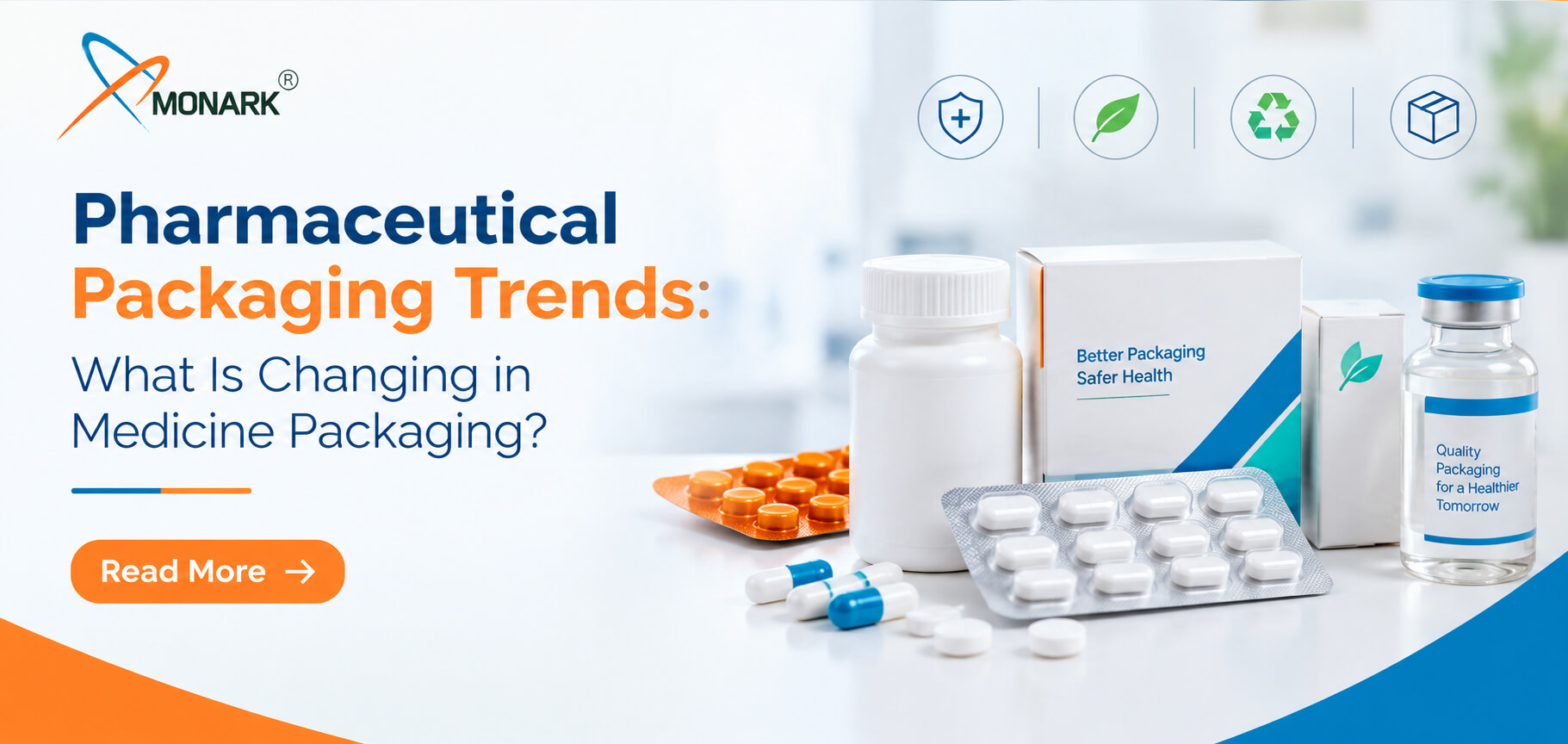
One Scan, More Trust: 7 Pharmaceutical Packaging Trends Changing the Future of Medicine
What if the smallest detail on a medicine pack could make the biggest difference?
A tablet may be tiny. A capsule may look ordinary. But the packaging surrounding that medicine has an important job: helping protect the product, communicating essential information, and supporting its journey from manufacturing to the patient.
Now imagine packaging that does more than hold a medicine. It can connect users to digital information, support product traceability, and help manufacturers identify defects before products leave the production line.
Welcome to the changing world of pharmaceutical packaging trends.
From blister-packed tablets to AI-assisted inspections and smarter identification systems, the pharmaceutical industry is exploring new ways to improve packaging performance. At the same time, manufacturers must balance innovation with product stability, quality assurance, regulatory requirements, and practical costs.
So, what is changing, which developments deserve attention, and how can pharmaceutical businesses make better packaging decisions?
Let's explore.
What are pharmaceutical packaging trends?
Pharmaceutical packaging trends include improved product protection, digital traceability, smart packaging technologies, user-friendly designs, and more efficient material use. These developments aim to support medicine quality, product identification, supply-chain visibility, and responsible packaging decisions while meeting applicable pharmaceutical requirements.
The Packaging Revolution: Why Medicine Packs Matter More Than Ever
Packaging is often the first thing a person notices about a pharmaceutical product. Yet its real value goes far beyond appearance.
Medicines may encounter humidity, light, temperature changes, transportation stress, and repeated handling. The packaging system must be appropriate for the formulation and its storage requirements.
Three priorities are shaping packaging decisions.
Protection comes first. Suitable materials and effective seals help protect medicines against relevant environmental and physical risks.
Information must be clear. Product names, batch numbers, expiry dates, directions, and other required information help support accurate identification and handling.
Traceability is becoming more important. Documented batch information and appropriate digital systems can help authorised supply-chain participants follow products and investigate concerns.
This is why modern pharmaceutical manufacturing and quality assurance must consider packaging alongside the finished medicine itself.
A visually impressive pack is not necessarily a better pack. The real objective is to choose a system that performs reliably for the product it contains.
Blister or Alu/Alu Packs vs Bottles: Which Pharmaceutical Packaging Format Wins?
There is no universal winner. The best format depends on the medicine, its stability characteristics, intended shelf life, distribution conditions, and packaging specifications.
However, understanding the available options, including conventional blister packs, Alu/Alu packs, and bottles, makes purchasing and manufacturing decisions easier.
Blister Packaging: Small Compartments, Practical Advantages
Blister packs hold individual tablets or capsules in separate cavities sealed with suitable lidding material. Depending on the design, the forming material may be plastic or aluminium-based.
For tablets available in blister packaging, important considerations include cavity design, sealing quality, material compatibility, and the level of moisture protection required.
The appropriate blister structure should be selected according to the medicine's specific stability and packaging requirements.
For capsules supplied in blister packs, the same principle applies: packaging must suit the formulation rather than follow a one-size-fits-all approach.
Alu/Alu Packaging: Enhanced Barrier Protection
Alu/Alu packaging, also known as cold-form aluminium blister packaging, uses aluminium-based material for both the forming web and the lidding foil. This structure provides a strong barrier against moisture, oxygen, and light when properly designed and sealed.
It can be suitable for medicines that require a high level of environmental protection. However, the final packaging choice depends on product stability data, material compatibility, manufacturing capabilities, and applicable quality requirements.
Key advantages of Alu/Alu packaging include:
-
High barrier protection against moisture, oxygen, and light
-
Individual cavities that separate doses
-
Reduced exposure to environmental conditions when the pack remains intact
-
Suitability for selected moisture-sensitive or light-sensitive pharmaceutical products
Alu/Alu packs may require more material and specialised forming equipment than some conventional blister formats. Therefore, manufacturers should balance protection requirements with production efficiency, cost, and packaging performance.
Bottle Packaging: Convenient for Multiple Units
Bottles can hold multiple tablets or capsules in one container. Depending on the medicine, the packaging system may include a suitable closure, tamper-evident seal, or desiccant.
These features must be selected according to the product's storage, stability, and handling requirements.
Strip Packaging: Another Option for Solid Doses
Strip packs enclose individual doses between layers of packaging material. Their construction differs from blister packs, so the two should not be treated as interchangeable. Material selection and sealing performance influence the level of protection provided.
Cartons: The Protective Outer Layer
Secondary cartons can group primary packs, support handling, and provide space for required product information and patient information leaflets. They complement the primary packaging rather than replace its protective function.
Quick Comparison Table
|
Format |
Common use |
Main consideration |
|
Conventional blister packs |
Individual tablet or capsule doses |
Material barrier properties and seal integrity |
|
Alu/Alu packs |
Individual doses needing a high barrier |
Strong moisture, oxygen, and light protection |
|
Strip packs |
Individually enclosed doses |
Material suitability and sealing performance |
|
Bottles |
Multiple tablets or capsules |
Closure performance and storage conditions |
|
Cartons |
Secondary packaging |
Handling, identification, and product information |
|
Sachets |
Selected powders or granules |
Seal quality and moisture protection |
The key lesson is simple: when comparing different pharmaceutical packaging formats, choose according to product requirements, not appearance alone. The right packaging format should support medicine stability, product quality, and the intended storage conditions.
From Production Line to Patient: Where Quality Meets Packaging
Have you ever considered how many controlled steps stand between raw materials and a finished medicine pack?
The tablet and capsule manufacturing process varies according to the formulation and dosage form.
Tablet production may involve dispensing, blending, granulation where required, compression, and coating where applicable. Capsule production may involve preparing the formulation and filling suitable capsule shells.
Finished products undergo appropriate checks against established specifications. Packaging operations then need to ensure that the correct medicine, approved components, and accurate printed information are brought together.
Five packaging checks that deserve attention
-
Component verification: Confirm that the intended packaging materials and components are being used.
-
Print inspection: Check product identification, batch details, expiry information, and other required text.
-
Physical inspection: Look for visible defects, damaged packs, or improperly formed compartments.
-
Seal verification: Apply suitable checks to assess seal integrity where relevant.
-
Batch documentation: Maintain appropriate records and investigate deviations according to established procedures.
These controls help reduce packaging errors and support product traceability.
For pharmaceutical buyers, this creates an important distinction: a supplier's product range matters, but its quality systems and documentation deserve equal attention.
One Scan, More Trust: The Rise of Smart Pharmaceutical Packaging
Could a tiny QR code become one of the most useful details on a medicine pack?
This is one of the more interesting developments in digital pharmaceutical packaging.
QR codes can connect a physical pack to digital product information. Depending on how the system is implemented, a scan may provide access to details such as product identification, batch information, or other authorised information.
However, a QR code alone does not prove that a medicine is genuine. Verification depends on the reliability of the underlying system, its data, and the applicable regulatory requirements.
Three innovations worth watching
QR-code traceability
Digital identification systems can help authorised participants access product information and support traceability when properly implemented.
AI-assisted quality inspection
Computer-vision systems can help identify visible defects, printing inconsistencies, and packaging irregularities on production lines. Their performance depends on suitable validation, operating conditions, and quality controls.
Connected packaging technologies
RFID and NFC can support identification and data exchange in appropriate applications. Sensors may also help monitor environmental conditions when designed for a specific purpose.
Why does this matter to pharmaceutical businesses?
Digital systems can strengthen information management, but they do not replace appropriate manufacturing controls, laboratory testing, or regulatory compliance.
For manufacturers and distributors, the practical question is not whether every pack needs advanced technology. It is whether a particular digital feature solves a genuine problem and can be implemented reliably.
The future of packaging may not simply involve adding more material. It may involve connecting physical products with better information.
Sustainable Packaging: Can Pharma Reduce Waste Without Risking Quality?
Sustainability is attracting attention across many industries, and pharmaceutical packaging is no exception.
But medicine packaging presents a particular challenge. A material that appears environmentally preferable may not provide the barrier performance needed by a sensitive formulation.
That means sustainability decisions require careful evaluation.
Read also: Immediate vs. Sustained Release Tablets: How Do They Work?
Where can improvements begin?
Reduce unnecessary material. Optimising carton dimensions and avoiding excess packaging can help reduce material consumption where feasible.
Evaluate recyclable alternatives. Packaging materials can be assessed for recyclability, provided the proposed system continues to meet the medicine's protective requirements.
Improve packaging efficiency. Appropriate pack design and material planning can help limit avoidable waste during production and distribution.
Validate changes before implementation. A change in packaging material or configuration should undergo the appropriate assessment to establish that product quality and stability remain protected.
Sustainable pharmaceutical packaging is not simply about choosing the material with the greenest appearance. It is about balancing environmental considerations with the essential responsibility of protecting medicine quality.
Choosing a Pharmaceutical Manufacturing Partner: Five Smart Questions
Packaging decisions become especially important when businesses evaluate third-party pharmaceutical manufacturing services.
The right partner should understand the product's requirements, the intended market, relevant quality expectations, and the agreed packaging configuration.
Before entering into a manufacturing arrangement, ask these five questions.
1. Are the manufacturer's credentials verifiable?
Review applicable licences, certifications, and supporting documentation. Confirm that the credentials are relevant to the proposed products and activities.
2. Can the required packaging be accommodated?
Discuss dosage forms, available configurations, material specifications, artwork, and pack sizes.
3. How are quality checks documented?
Ask about batch records, packaging inspections, deviations, and procedures for handling quality complaints.
4. Are production and delivery expectations clear?
Discuss lead times, minimum order quantities, supply planning, and how delays will be communicated.
5. Are responsibilities clearly defined?
Confirm the respective obligations of the manufacturer and business partner, including applicable regulatory and quality responsibilities.
Do not choose a manufacturing partner on price alone. Verified capabilities, reliable communication, and appropriate quality systems can be just as important to a sustainable business relationship.
Monark Biocare: Connecting Pharmaceutical Products With Business Opportunities
For pharmaceutical distributors and eligible industry partners, Monark Biocare provides a starting point for exploring its pharmaceutical portfolio and relevant business opportunities.
Businesses interested in distribution can review the company's PCD Franchise Services page for information about its franchise-related offering.
You can also explore examples from its pharmaceutical tablet and capsule portfolio through the MICFLAM-DX Tablet and MECOARK-P Capsule product pages.
For businesses considering pharmaceutical sourcing, it is important to confirm current product availability, packaging specifications, manufacturing capabilities, and commercial terms directly with the company.
Understanding packaging requirements and selecting the right business partner should go hand in hand.
Breaking the Mold: Could AI Make Medicine Packaging Smarter Than Ever?
What if a machine could spot a packaging defect before a human even noticed it?
From cameras that help detect packaging defects to digital tools that improve product tracking, pharmaceutical packaging is moving beyond basic protection. Smart technologies are opening new possibilities for product visibility, quality checks, and access to essential medicine information.
3 Next-Gen Packaging Trends Everyone in Pharma Should Watch
1. AI That Sees What Humans Might Miss
AI-assisted vision systems can help identify printing errors, damaged blister cavities, missing components, and other visible defects. When properly validated, these systems can support faster, more consistent packaging inspections.
2. Smart Codes, Smarter Traceability
QR codes and other digital identification technologies can connect medicine packs with relevant product information. When backed by reliable verification systems, they can support traceability and help authorised supply-chain participants investigate product concerns.
3. Packaging That Thinks Beyond the Box
Connected technologies such as RFID and NFC can support product identification and data exchange. In suitable applications, sensors can also help monitor environmental conditions for products that need additional storage controls.
Why Should Pharmaceutical Businesses Care?
For companies evaluating third-party pharmaceutical manufacturing services, these developments highlight the growing importance of packaging specifications, documented quality checks, and reliable product identification.
However, technology is not a shortcut to safety. AI systems require appropriate validation, digital codes do not automatically prove authenticity, and every packaging innovation must suit the medicine's specific requirements.
The big idea? Tomorrow's pharmaceutical packaging won't just be about protecting what's inside. It will increasingly be about making product information more accessible, quality checks more effective, and supply chains more transparent.
For pharmaceutical manufacturers and distributors, staying informed about these developments is a practical step towards making smarter packaging decisions.
Conclusion: The Future of Medicine Packaging Is More Than a Pretty Pack
The next generation of pharmaceutical packaging will be shaped by a combination of protection, reliable information, smarter technology, and responsible material choices.
Blister packs, Alu/Alu Packs, strip packs, bottles, and cartons will continue to serve different needs. Meanwhile, digital traceability and AI-assisted inspection may create additional opportunities where they are appropriate and properly implemented.
For pharmaceutical businesses, the priority is to connect packaging decisions with product stability, manufacturing quality, and supply-chain requirements.
Monark Biocare offers a relevant starting point for businesses exploring its pharmaceutical products and distribution opportunities. Visit Monark Biocare or explore its PCD Franchise Services page to learn more.
Contact Monark Biocare
-
Address: Plot No. 201, HSIIDC, Alipur, Barwala, Haryana, India
-
Email: monarkbiocare@gmail.com
-
Phone: +91-9855986633, +91-9023256719, +91-9888656719
Ethical Promotion: Confirm product information, packaging availability, applicable licences, and quality documentation directly with the company before entering into a pharmaceutical supply or manufacturing arrangement.
Frequently Asked Questions
1. What are the latest pharmaceutical packaging trends?
Major developments include digital traceability, improved packaging protection, AI-assisted inspection, user-friendly designs, and material optimisation. Adoption depends on product needs, available technology, and applicable regulations.
2. Why are tablets commonly supplied in blister packs?
Blister packs separate individual doses and can provide a suitable protective barrier when the selected materials and seals meet product requirements. They can also make individual units easier to handle.
3. Can capsules be supplied in blister packaging?
Yes. Capsules can be supplied in blister packs when the configuration and materials are suitable for the formulation and its stability requirements.
4. Does a QR code guarantee medicine authenticity?
No. A QR code may provide access to product information or support a verification process, but authenticity depends on the reliability of the verification system and its supporting data.
5. What role does quality assurance play in pharmaceutical packaging?
Quality assurance helps ensure that approved components, accurate printed information, appropriate packaging procedures, and required records are maintained. It also supports the investigation of defects and deviations.
6. How can pharmaceutical packaging become more sustainable?
Possible approaches include reducing unnecessary materials, optimising pack dimensions, and assessing recyclable alternatives. Changes must preserve product protection and meet applicable requirements.
7. What should businesses check before selecting a third-party manufacturer?
Review relevant licences, quality systems, product capabilities, packaging options, documentation practices, supply reliability, and commercial terms. Verify all claims before making a decision.
Disclaimer: The information in this article is intended for general educational and informational purposes only. Pharmaceutical packaging trends, technologies, and regulatory requirements may vary by region and product type. The content should not be considered medical, legal, or regulatory advice. Always consult qualified professionals and follow applicable guidelines before making pharmaceutical manufacturing, packaging, or quality assurance decisions. Product availability and specifications may change. Monark Biocare makes no guarantee of outcomes based solely on the information provided.